Temperature-controlled freight leaves very little room for error. A shipment can look fine on paper, move on schedule, and still arrive unusable if conditions aren’t maintained along the way.
Reefer and cold chain logistics are designed to prevent that. But protection doesn’t come from equipment alone. It comes down to how well each step is planned, executed, and monitored while the freight is in transit.
This guide breaks down how temperature-controlled shipping works, where it fails, and how to keep your shipments protected from pickup through delivery.
What Is Reefer and Cold Chain Logistics?
Reefer logistics refers to the use of temperature-controlled equipment, such as refrigerated trailers and containers, to move freight that must stay within a defined temperature range.
Cold chain logistics is broader. It includes the entire system that maintains temperature control, from origin to final delivery.
That system typically includes:
- Pre-cooling to customer required temperature at origin
- Temperature-controlled storage
- Proper loading and handling
- Transportation in reefer equipment
- Monitoring during transit
- Controlled delivery and handoff
Reefer equipment is only one part of the process. The cold chain is what ensures the product arrives in the same condition it left.
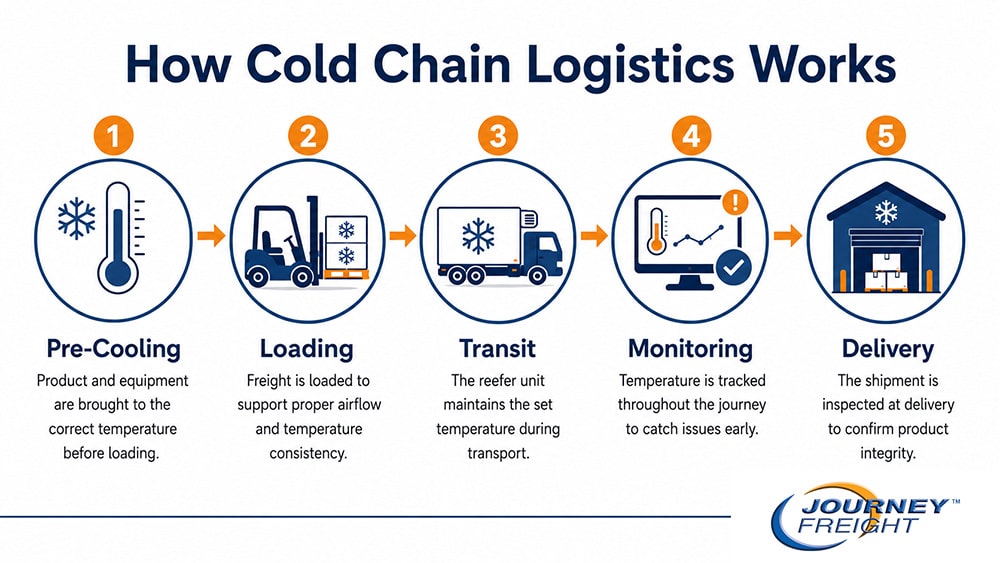

How Cold Chain Logistics Works
A successful cold chain depends on consistency across every stage of the shipment.
- Pre-Cooling – Before loading, both the product and the reefer unit must be brought to the correct temperature. If this step is missed or rushed, the shipment starts at a disadvantage.
- Loading – Freight must be loaded in a way that allows proper airflow. Poor loading practices can create hot spots and uneven temperature distribution.
- Transit – During transport, the reefer unit maintains the set temperature. External conditions, transit time, and handling all play a role in maintaining stability.
- Monitoring – Temperature should be tracked throughout the journey. Without monitoring, issues often go unnoticed until delivery.
- Delivery – At the final destination, the product is inspected. If temperature conditions were not maintained, the shipment may be rejected.
Reefer Temperature Ranges
Different products require different temperature environments. Exact requirements should always be confirmed by product specification, customer instructions, and applicable regulations. As a general reference, many shipments fall into these categories:
- Frozen: Typically below 0°F (-18°C)
- Refrigerated or chilled: Commonly used for products that need to stay above freezing, often within ranges such as 34°F to 46°F (1°C to 8°C) or 46°F to 55°F (8°C to 13°C), depending on the product
- Controlled ambient: Maintained within a stable, moderate range depending on the product

Selecting the correct temperature range is critical. Depending on the product, even a short period outside the approved temperature range can lead to spoilage, loss of efficacy, stability issues, or rejected loads.
Types of Reefer Equipment
The type of equipment used depends on the mode and shipment requirements.
Reefer Trailers – Used for over-the-road shipments across North America. These are the most common for domestic and cross-border moves.
Reefer Containers – Used for ocean and intermodal transport. Designed to maintain temperature over long distances.
Air Freight Solutions – Used for time-sensitive shipments requiring strict temperature control. Often combined with specialized packaging.
Each option has different capabilities, transit times, and cost considerations.
Where Cold Chains Break Down
Most temperature-controlled failures are not caused by a single issue. They happen when small gaps go unchecked.
Improper Preparation – If product or equipment is not pre-cooled correctly, temperature control becomes difficult from the start.
Poor Loading Practices – Blocked airflow or improper pallet placement can create inconsistent conditions inside the trailer.
Equipment Issues – Reefer unit malfunctions, incorrect settings, or fuel problems can lead to temperature excursions.
Handling During Transit – Frequent door openings or delays at facilities can impact internal temperature.
Lack of Visibility – Without real-time monitoring, issues are often discovered only after delivery.
The Cost of Temperature Excursions
When a shipment falls outside its required temperature range, the impact is immediate.
- Product may need to be discarded
- Loads may be rejected at delivery
- Replacement shipments increase cost
- Customer relationships are affected
- Brand reputation is put at risk
By the time the issue is identified, the value of the product has already been affected.
Best Practices for Reliable Reefer Shipping
Strong cold chain performance comes from consistency and control.
Prepare Properly – Ensure both product and equipment are at the correct temperature before loading.
Use the Right Equipment – Match the equipment to the product, route, and transit time.
Load With Airflow in Mind – Proper spacing and pallet configuration help maintain consistent temperature.
Monitor During Transit – Track temperature conditions throughout the shipment, not just at pickup and delivery.
Act on Exceptions Quickly – When a temperature issue occurs, response time determines whether the shipment can be saved.
Align All Parties – Shippers, carriers, and receivers should be working from the same expectations and information.
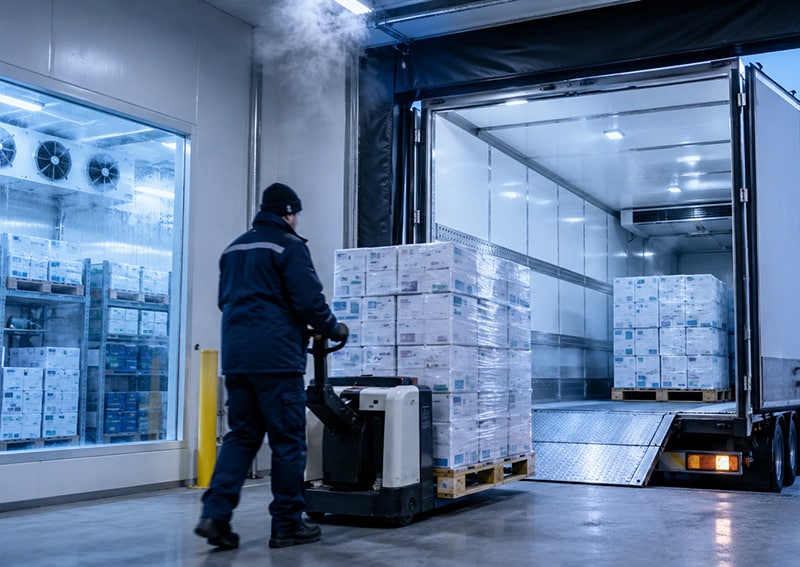

The Role of Visibility in Cold Chain Logistics
Visibility is one of the biggest gaps in temperature-controlled shipping.
A reefer unit can be running, but that does not guarantee the product is within range. Without insight into actual conditions, teams are left reacting after the fact.
With proper monitoring:
- You know when temperature conditions change
- You can act before the shipment is compromised
- You can provide accurate updates to your customer
This shift from reactive to proactive control is what protects both the product and your reputation.